The 18-Month Test: Can Your London Restaurant Survive It?
16th February 2026Restaurant Concept Creation in London: From Big Idea to Viable Business
You have capital, a site in zone 1 or 2, and a strong conviction about what London’s dining scene needs. The question you’re weighing is not whether the idea feels exciting, it almost certainly does, but whether it can sustain performance across the first 18 months when lease commitments are fixed and investor patience is finite. Most restaurant failures in London are not creative failures; they are commercial ones, and the gap between concept and viability opens early.
Decision at stake:
The core decision is how to pressure-test and shape your idea before committing capital to build-out and launch. You are likely weighing:
- Whether to move straight to design and fit-out, trusting the strength of the original vision
- How much to invest in menu development, operations planning, and financial modeling before signing contracts
- Whether to bring in external expertise now or wait until operational challenges surface post-launch
- How to balance creative ambition with the commercial discipline required to protect investor return
- Where to draw the line between differentiation and operational complexity that undermines margin
What most teams get wrong:
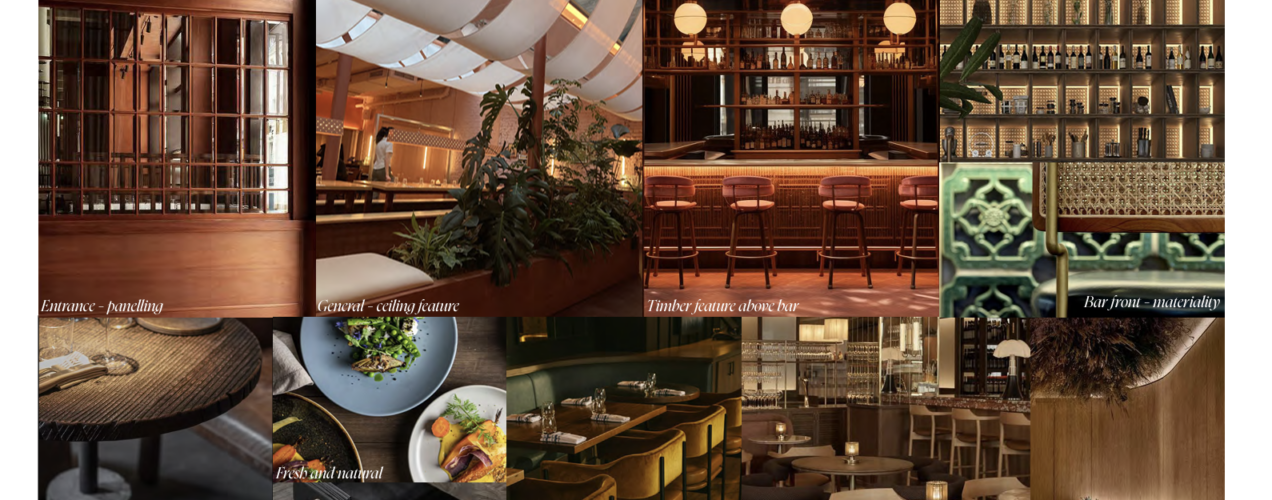
Across London’s independent and group-backed restaurant openings, the most common misstep is confusing a compelling narrative with a viable operating model. A concept that works as a pitch deck or mood board does not automatically translate into something a kitchen can execute consistently at volume, or that guests will return to frequently enough to sustain covers.
The risk compounds when founding teams are weighted toward creative talent without equivalent strength in commercial planning and operational systems. Menu development proceeds without cost modeling; service design is shaped by aspiration rather than labor availability or wage structure; and brand positioning is articulated before the unit economics are stress-tested against realistic footfall and average spend assumptions.
By the time the first eight weeks of trading data arrive, the variables that determine success or failure, food cost structure, labor efficiency, pricing, are already locked into lease terms, supplier contracts, and guest expectations. Retrofitting commercial discipline at that stage is painful and often too late.
Lumière’s perspective and method: Building from commercial foundations
We begin by anchoring creative development in financial reality. That means defining target guest profiles, frequency assumptions, and spending behavior before finalising menu structure or service style. It means modeling food and beverage costs against competitor positioning and rent as a percentage of projected revenue, then working backward to shape a menu that can deliver both distinction and margin.
Menu development is not treated as a creative exercise in isolation. We map each dish to prep complexity, ingredient availability, supplier reliability, and skill requirements within realistic wage bands for London. The goal is a menu that can be executed consistently by the team you can actually afford to hire and retain, not the team you wish you had.
Guest experience is the result of clear behavioral standards, consistent training, and a leadership culture that holds the line on service quality even under pressure. We work with founding teams to define service non-negotiables and embed them into onboarding, shift briefings, and performance conversations before launch.
We manage the operational side of the launch timeline: coordinating with designers, contractors, equipment suppliers, and licensing authorities to keep the project on track and reduce the risk of cost overruns or delayed openings. We handle supplier onboarding, staff recruitment, training schedules, and soft launch planning, so the founding team can focus on refining the concept and preparing for trading.
For clients who prefer a lighter-touch engagement, we provide advisory support at key decision points: reviewing lease terms, validating financial assumptions, auditing the menu for operational feasibility, or conducting a pre-launch readiness assessment. The level of involvement is flexible and shaped by what the client needs to reduce risk and protect capital.
5 questions to stress-test your restaurant concept before committing capital:
- Can you articulate your target guest and visit frequency? (Not “foodies” or “locals”, define spending behavior, dining occasions, and how often they will realistically return.)
- Do your unit economics hold under conservative assumptions? (Model worst-case scenarios on covers, average spend, and food cost, and confirm the concept can still break even within a reasonable timeframe.)
- Can your kitchen execute the menu consistently with the labor you can afford? (Account for skill availability, wage pressure, and prep time required to deliver the food at the quality and speed the concept promises.)
- Does your service style align with your revenue model? (Does the dining experience and operational flow support your revenue targets, or will service friction slow you down?)
- Have you documented the operating model in a way that can transfer to a second site or a new team? (If the concept depends entirely on the founder’s presence or on relationships that cannot be replicated, scaling will be difficult and risky.)
If you are evaluating whether your restaurant concept can move from vision to viable business, or if you are preparing to open in London and want to reduce commercial risk before committing to build-out, Lumière can help you pressure-test assumptions, model scenarios, and shape the operational structure that will protect both capital and guest trust. The earlier we are involved, the more variables remain flexible.
If you want to learn more about Lumiere consultancy you can contact us here